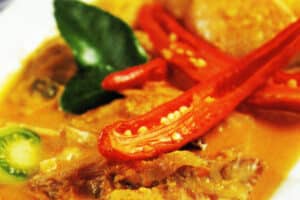

Indonesian cuisine is a vibrant tapestry of flavors, techniques, and cultural traditions that reflect the country’s rich history and diverse geography. Among the many traditional cooking methods, saksang, bakar batu, and papeda sagu stand out as unique and deeply rooted in local customs. These dishes not only offer a taste of Indonesia’s heritage but also provide insight into the way communities have preserved their culinary identity over generations.
What is Saksang?
Saksang is a traditional dish from the Batak region of North Sumatra, particularly associated with the Toba Batak people. It is more than just a meal; it is a symbol of unity and celebration in Batak culture. The dish typically consists of meat—often pork, buffalo, or beef—slow-cooked with a variety of spices, including andaliman (a local pepper known for its citrusy and numbing flavor), garlic, lemongrass, and other aromatic herbs. What sets saksang apart is the use of fresh animal blood, which adds a deep, savory richness to the broth.
Key Features of Saksang:
- Meat: Usually pork, but can also be buffalo or beef.
- Spices: Andaliman, galangal, lemongrass, and chili.
- Blood: Freshly collected and added to the stew.
- Cultural Significance: Served during weddings, festivals, and communal gatherings, symbolizing togetherness and gratitude.
The preparation of saksang is a communal effort, often involving multiple family members or neighbors. This practice reinforces the importance of community and shared labor in Batak society. The result is a hearty, flavorful stew that is both nourishing and deeply symbolic.
What is Bakar Batu?

Bakar batu, or “stone-baked,” is a traditional cooking method used by various indigenous groups in Indonesia, particularly in the eastern parts of the archipelago. This technique involves using heated stones to cook food, often in an earth oven. The process begins by digging a pit, placing hot stones inside, and layering the ingredients—such as tubers, fish, and vegetables—before covering them with leaves and soil. The heat from the stones slowly cooks the food, infusing it with a smoky, earthy flavor.
Key Features of Bakar Batu:
- Method: Using heated stones to bake or roast food.
- Ingredients: Commonly includes root vegetables, fish, and meats.
- Flavor: Smoky, earthy, and naturally seasoned.
- Cultural Use: Often used in ceremonial meals or for special occasions.
This method is not only practical but also sustainable, relying on natural resources and minimal fuel. It reflects the ingenuity of indigenous communities in adapting to their environment while preserving their culinary traditions.
What is Papeda Sagu?
Papeda sagu is a staple food in the eastern regions of Indonesia, particularly in Papua and Maluku. Made from sago flour, papeda is a thick, starchy porridge that is typically eaten with a side of fish, vegetables, or meat. The texture of papeda is unique—it is soft yet firm, and it is usually eaten with a spoon or dipped into a sauce.
Key Features of Papeda Sagu:
- Base Ingredient: Sago flour, derived from the pith of the sago palm.
- Texture: Thick, sticky, and slightly chewy.
- Serving Style: Eaten with a variety of accompaniments like fish, vegetables, or sambal.
- Cultural Significance: A central part of daily meals in many indigenous communities.
Papeda is more than just a food item; it represents the connection between the people and their land. In many areas, the production of sago is a communal activity, involving harvesting, processing, and cooking together. This practice reinforces social bonds and preserves traditional knowledge.
The Cultural and Culinary Importance of These Dishes
Saksang, bakar batu, and papeda sagu are more than just traditional dishes—they are living expressions of Indonesia’s cultural diversity. Each of these cooking methods has been passed down through generations, carrying with it stories, values, and rituals that define the communities that created them.
- Saksang embodies the spirit of togetherness and reverence for ancestors.
- Bakar batu showcases the resourcefulness and sustainability of indigenous cooking practices.
- Papeda sagu highlights the deep relationship between the people and their environment, especially in the eastern parts of the country.
These dishes are not only about sustenance but also about identity, memory, and tradition. They serve as a reminder of how food can bring people together, preserve heritage, and celebrate the uniqueness of each region.
Conclusion
Exploring traditional Indonesian cooking methods like saksang, bakar batu, and papeda sagu offers a deeper understanding of the country’s rich culinary heritage. These dishes are not just about taste—they are about culture, community, and the enduring legacy of Indonesia’s diverse peoples. Whether you’re trying saksang at a Batak wedding, enjoying bakar batu in a remote village, or savoring papeda with a simple fish dish, you’re experiencing the soul of Indonesian cuisine.
As the world becomes more connected, it’s important to preserve and appreciate these traditional methods. They are not just relics of the past but vital components of Indonesia’s ongoing culinary story. So next time you encounter these dishes, take a moment to appreciate the history, skill, and heart behind each bite.